
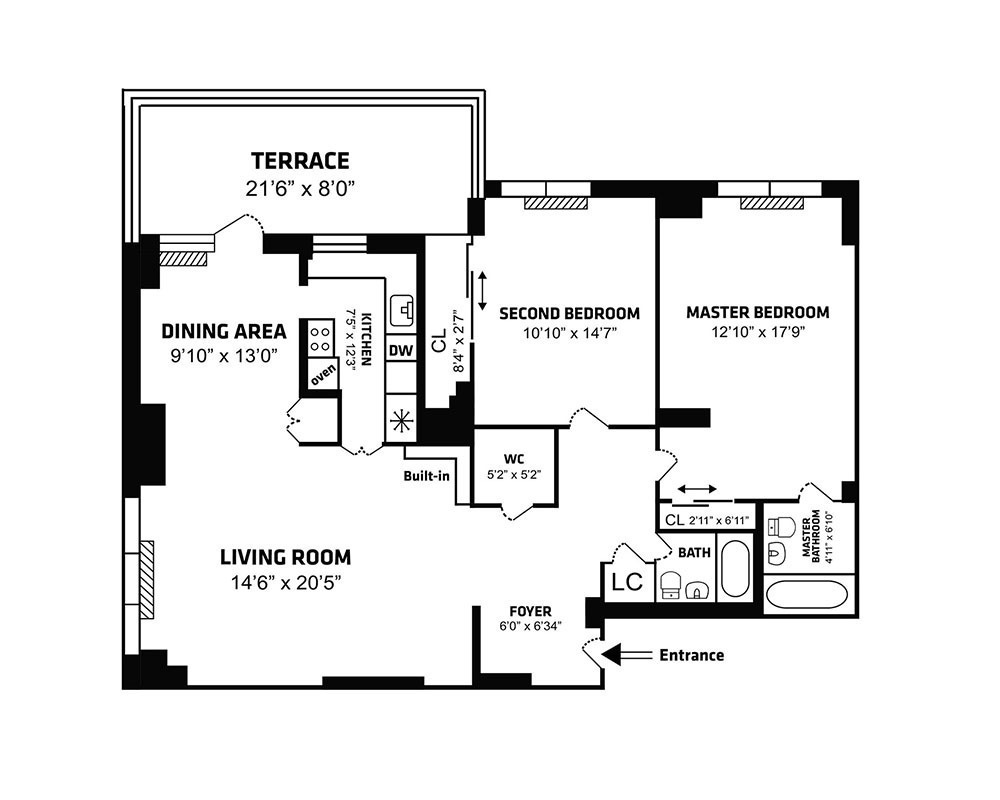
A buyer likes the photos, watches the video, and still hesitates. That pause usually comes down to one thing: they still do not understand how the home actually works. Floor plans for real estate listings solve that problem quickly. They turn a set of attractive images into a property presentation that feels complete, practical, and easier to trust.
For agents and property marketers, that matters because online attention is short and comparison shopping is relentless. Buyers are scanning multiple listings in a single session, often on mobile, and they are making split-second judgments about layout, usability, and fit. If a listing leaves basic questions unanswered – Where is the primary suite? How far is the kitchen from the living area? Is there a clear separation between bedrooms? – interest drops fast.
Table of Contents
ToggleWhy floor plans for real estate listings matter
Photos create emotion. Floor plans create clarity. Strong listings need both.
A floor plan gives buyers a spatial overview that even a well-shot gallery cannot fully provide. Wide-angle photography can make rooms feel open, but it can also distort proportion. Video can show movement, but it moves at the pace chosen by the editor. A floor plan gives buyers control. They can stop, study, and understand the relationship between rooms on their own terms.
That becomes especially valuable when a property has a layout that is hard to read from photos alone. Multi-level homes, converted spaces, ADUs, mixed-use properties, larger condos, and homes with additions often create confusion online. A floor plan reduces that confusion and helps qualified buyers self-identify faster.
This is not just about presentation polish. It is about reducing friction in the decision process. The clearer the layout, the easier it is for a buyer to picture furniture placement, daily routines, privacy, circulation, and use of space. That makes the listing more useful, and useful listings tend to perform better.
What buyers actually learn from a floor plan
Most buyers are not studying a floor plan like an architect. They are looking for practical answers.
They want to know whether the secondary bedrooms are grouped together or split. They want to see whether the kitchen opens to the main living space. They want to understand if a home office is truly separate or just a corner off another room. In condos and apartments, they often want to know where the entry sits in relation to bedrooms and shared living areas. In commercial or multi-unit marketing, layout visibility helps investors and tenants assess function more quickly.
This is where floor plans outperform description copy. Listing remarks can say spacious, functional, or well-designed, but a floor plan lets buyers verify those claims themselves. That matters in a market where credibility influences response rates.
For serious buyers relocating within Los Angeles or from outside Southern California, floor plans can be even more valuable. They may not be able to visit immediately, so they rely more heavily on digital assets to decide whether a property deserves a showing. If the layout is clear, they are more likely to act with confidence.
Floor plans support stronger listing presentation
A complete listing package signals professionalism. When a property includes photography, video, and a clear floor plan, it feels better prepared for the market.
That impression has practical value. Sellers notice it. Buyers notice it. Other agents notice it. A listing with well-organized visual media communicates that the property is being represented carefully, not casually.
Floor plans also help bridge the gap between visual appeal and real-world decision-making. A twilight exterior may earn the click. Interior photos may hold attention. But once a buyer starts evaluating whether the property fits their needs, the floor plan often becomes one of the most persuasive assets in the entire package.
This is particularly true for higher-value homes, larger square footage, and properties with unique architecture. The more complex the home, the more important layout communication becomes. Luxury buyers are not just buying finishes. They are buying flow, privacy, function, and how the space supports a certain standard of living.
When floor plans have the biggest impact
Not every listing depends on a floor plan equally, but many benefit more than agents expect.
Vacant homes are a strong example. Without furniture, buyers can struggle to judge room purpose and scale from photos alone. A floor plan gives structure to the visual story. The same applies to homes with unconventional room shapes, narrow corridors, bonus rooms, or detached living areas.
They are also highly effective for condos and townhomes, where buyers want to understand adjacency, entry sequence, and the placement of bedrooms relative to common areas. For investment properties and multi-unit listings, a floor plan can help communicate unit arrangement and building organization more efficiently than a long property description.
There are trade-offs, of course. If a floor plan is poorly measured, hard to read, or visually cluttered, it can create more confusion instead of less. It also should not replace strong photography. A floor plan answers different questions than photos do. The best listing strategy is not either-or. It is a coordinated media package where each asset does a specific job.
What makes a good floor plan for real estate listings
A useful floor plan is clear first and stylish second. Buyers should be able to understand it in seconds.
That means logical labeling, clean linework, readable room names, and dimensions or scale cues when appropriate. It should reflect the property accurately and avoid unnecessary visual noise. If color is used, it should support readability rather than compete with it.
There is also a presentation decision to make. Some listings benefit from simple 2D plans because they are fast and easy to interpret. Others may benefit from enhanced visuals, especially when the goal is to support premium marketing. The right choice depends on property type, audience, budget, and how the floor plan fits into the broader listing package.
MLS compatibility matters too. Real estate media should be prepared with platform requirements in mind, not treated as an afterthought. That is one reason many agents prefer working with a provider that understands listing workflows, image presentation standards, and how buyers actually consume media online.
Floor plans and buyer qualification
One overlooked advantage of floor plans is that they can improve lead quality.
When buyers can understand the layout before booking a showing, they are less likely to request a visit for a property that clearly does not fit their needs. That saves time for agents and sellers. It also means that inquiries coming through may be better aligned with the actual product.
This is especially helpful in busy markets where showing schedules are tight and listing teams are managing multiple properties at once. Better-informed buyers tend to ask better questions. They arrive with a clearer sense of whether the home works for their household, lifestyle, or investment goals.
That does not mean a floor plan filters out all unqualified interest. Some buyers will still need an in-person experience to decide. But as a screening and education tool, it can improve efficiency across the marketing process.
Why floor plans fit a modern listing strategy
The strongest real estate marketing does not rely on one standout asset. It builds a system of assets that work together.
Photography attracts attention. Aerials provide context. Video adds movement and tone. Virtual staging helps buyers interpret empty rooms. Floor plans complete the picture by explaining structure. When these elements are coordinated well, the listing becomes more persuasive because it answers both emotional and practical questions.
That integrated approach is particularly relevant in competitive Southern California markets, where buyers often compare homes rapidly and expect polished presentation from the start. A listing that explains itself clearly has an advantage over one that makes people work too hard to understand it.
For that reason, floor plans should not be treated as an optional extra added only when a seller asks. In many cases, they are a smart part of the core marketing strategy. Companies like Klikarts build them into a broader visual approach because the goal is not just to make a property look good – it is to help the listing perform better.
If a buyer can picture the home, understand the layout, and connect those details to daily life, the listing has done its job well. That is what floor plans add: less guessing, more confidence, and a better path from online interest to real-world action.