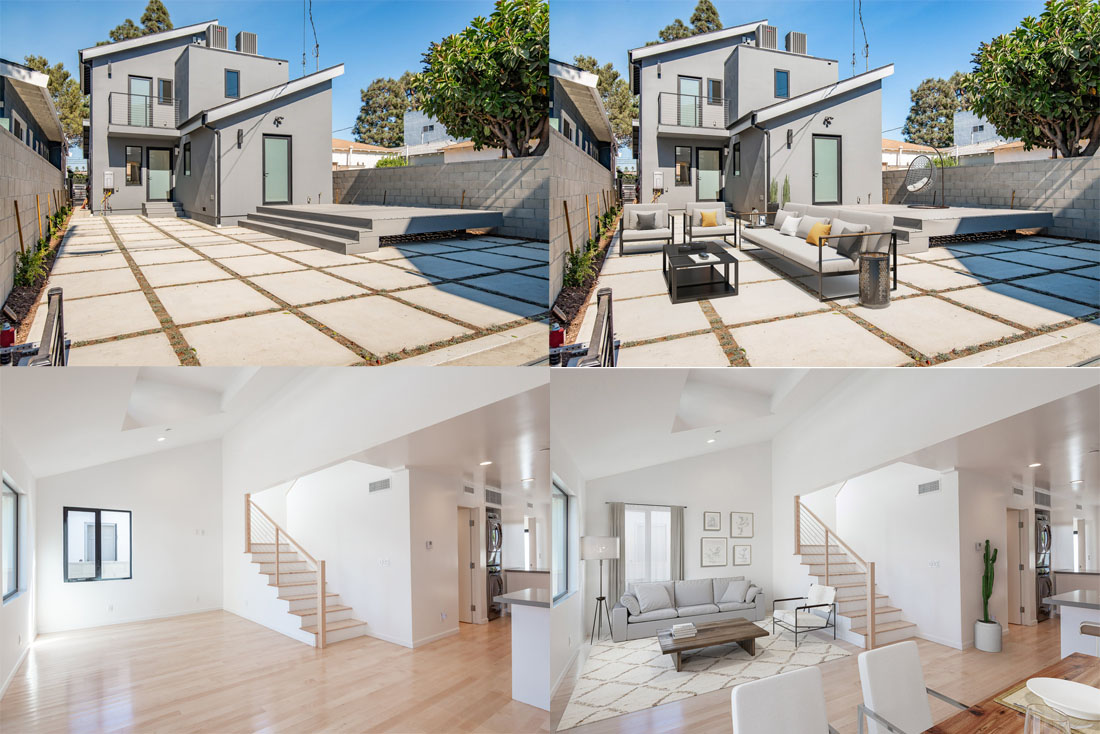
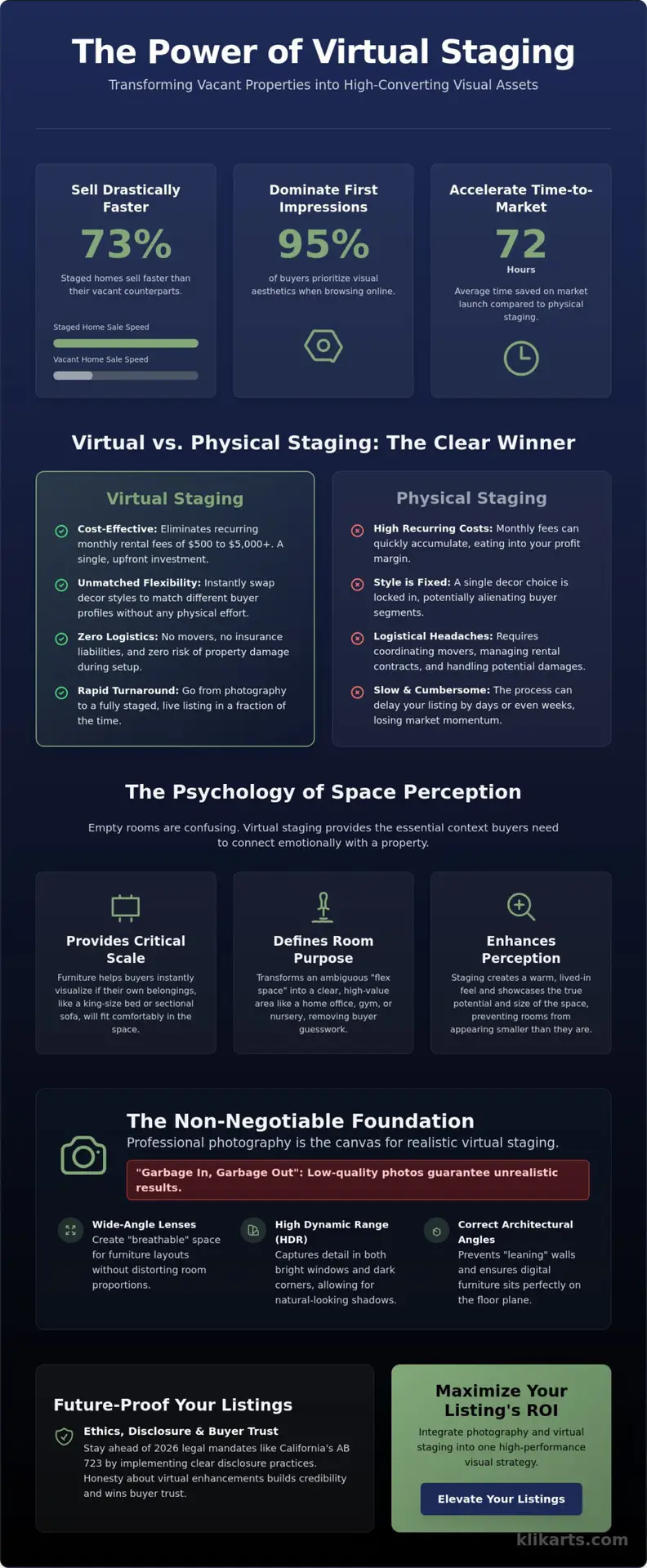
Staged homes sell 73% faster than vacant ones, but the logistical headache of physical furniture often stalls a listing’s momentum. You’ve likely seen how vacant rooms appear small and uninviting in photos, yet traditional staging can cost thousands of dollars per month. Utilizing virtual staging for real estate listings has become the strategic standard for high-performing agents who need to bypass these hurdles. You understand that a property’s first impression happens on a screen, and an empty space rarely inspires the urgency required for a top-dollar offer.
We agree that your brand deserves better than the “uncanny valley” look of cheap, unrealistic graphics. This guide promises to help you master the art of high-impact digital staging to transform vacant listings into high-converting visual assets. We’ll preview critical 2026 regulatory updates, such as California’s AB 723 disclosure requirements, and the latest shifts toward warm, organic interior trends. You’ll learn how to combine professional architectural photography with sophisticated digital layers to sell properties faster and maintain your reputation as a market leader.
Key Takeaways
- Learn why 95% of buyers prioritize visual aesthetics and how to use digital assets to secure a dominant first impression.
- Understand why professional architectural photography is the non-negotiable foundation for high-quality virtual staging for real estate listings.
- Master neighborhood-specific styling to ensure your digital furniture choices match the architectural pedigree of the home.
- Stay ahead of 2026 legal mandates like AB 723 by implementing ethical disclosure practices that build buyer trust.
- Optimize your marketing ROI by integrating photography, 3D floor plans, and staging into one high-performance visual strategy.
Virtual Staging for Real Estate Listings in 2026: The Digital First Impression
High-performance marketing begins where the viewer’s eye lands. To understand the technical foundation of modern listings, it’s helpful to review
what virtual staging is; it’s the professional digital insertion of furniture, lighting, and decor into property photography to create a lived-in atmosphere. In 2026, virtual staging for real estate listings has evolved from a luxury add-on to a fundamental requirement. Market data shows that 95% of buyers now prioritize high-quality visual aesthetics over written descriptions when browsing online. A cold, vacant room often fails to spark an emotional connection, whereas a digitally furnished lifestyle image invites the buyer to imagine their future in the home.
Speed is a critical currency in the real estate industry. Digital staging cuts your time-to-market by an average of 72 hours compared to the logistical demands of physical staging. You don’t have to wait for furniture delivery or coordinate with moving crews. Instead, you can move from photography to a live listing with incredible efficiency. This rapid turnaround ensures your property hits the market while the lead momentum is at its peak.
Virtual vs. Physical Staging: A Cost-Benefit Analysis
The financial disparity between digital and physical methods is stark. Physical furniture rental often creates a price gap of $500 to $5,000 or more per month depending on the property size. Virtual staging eliminates these recurring costs while offering unparalleled flexibility. You can change decor styles to match different buyer personas instantly. If a modern minimalist look isn’t attracting the right leads, you can pivot to a transitional style without lifting a single chair. This approach provides significant logistical relief. There are no movers to manage, no insurance liabilities to carry, and zero risk of damaging expensive hardwood floors during installation.
The Psychology of Space Perception
Empty rooms are notoriously difficult for the human brain to process. Furniture provides essential scale, helping buyers visualize whether their king-size bed or sectional sofa actually fits the dimensions of the room. Without these visual cues, spaces often appear smaller and more confined than they are. Digital staging also defines room purpose with precision. It can transform an ambiguous flex space into a high-end home office or a cozy nursery, removing the visual noise and confusion that often accompanies empty, echoing rooms. By providing a clear spatial narrative, you help buyers move past the “how” of the house and straight into the “why” of the home.
The Foundation of Realism: Why Professional Photography Matters
High-quality virtual staging for real estate listings isn’t a magical fix for a poor image. If the base photo is flawed, the digital furniture will look like a sticker pasted onto a page. This is the “Garbage In, Garbage Out” rule of real estate marketing. iPhone photos, while convenient, lack the dynamic range and architectural precision required to anchor 3D assets realistically. Professional
Residential Home Photography ensures that every pixel is optimized for the staging process, providing a clean and stable canvas for digital enhancement.
Professional cameras utilize wide-angle lenses to create “breathable” space. This allows for realistic furniture layouts without crowding the frame or distorting the room’s proportions. According to an
official industry report, the quality of listing visuals directly impacts buyer trust and their willingness to visit a property in person. HDR (High Dynamic Range) is essential for this foundation. It captures intricate details in both bright windows and dark corners simultaneously. Without this balance, digital furniture won’t cast natural shadows. It will appear to float rather than sit firmly on the floor, breaking the illusion of reality for the viewer.
Architectural Angles and Digital Depth
Tripod height is a science that dictates the success of a digital layout. If the camera is positioned too high, the furniture perspective won’t match the room’s floor plane, creating a jarring visual disconnect. We align the camera vertically to prevent “leaning” walls and distorted ceilings. This creates a stable foundation for digital decor. For the most dramatic effect, Twilight Photography offers a unique backdrop. The soft exterior light balances with the interior glow, providing a premium canvas for virtual lighting effects that feel warm and inviting. You can secure this high-end look by booking a
professional photography session before starting your staging project.
Resolution Requirements for 2026 Displays
By 2026, 8K monitors and high-density mobile screens have become the market standard for home buyers. Base files must be at least 300 DPI to avoid pixelation when a user zooms in to see floor textures or fabric details. If you start with a low-resolution file, the final staged image will look blurry and unprofessional on modern devices. The technical synergy between a RAW photo and a 3D furniture render creates a seamless, lifelike finish that commands attention. Professional image enhancement sharpens edges and corrects colors before the first digital chair is even placed. This meticulous preparation ensures your listing maintains a premium brand image across all platforms.
Los Angeles Style Guide: Matching Staging to the Neighborhood
A generic furniture catalog is a liability in a market as architecturally diverse as Los Angeles. You wouldn’t place a minimalist Scandinavian sofa in a Spanish Colonial Revival in Los Feliz; it breaks the immersion and confuses the buyer’s sense of place. High-end virtual staging for real estate listings requires a nuanced understanding of local design expectations. We focus on matching digital decor to the specific architectural pedigree of each property. This ensures the visuals feel authentic to the neighborhood and the home’s history, maintaining your brand’s reputation for excellence.
Your staging strategy must shift based on the target demographic. A Silicon Beach tech executive looking at a Venice loft expects a different aesthetic than a family viewing a Craftsman in Pasadena. By curating digital catalogs that mirror luxury LA showrooms, Klikarts Photography helps you speak directly to these specific buyer personas. This strategic alignment increases the perceived value of the property. It drives faster inquiries because the buyer sees a lifestyle they actually want to inhabit.
Coastal Modern vs. Hollywood Regency
Neighborhood-specific aesthetics dictate the success of your listing’s digital first impression. In Santa Monica and Malibu, we favor Coastal Modern styles. This involves light woods, breathable linens, and airy indoor-outdoor transitions that emphasize the beachside location. Conversely, West Hollywood and Beverly Hills listings often demand Hollywood Regency or Ultra-Modern aesthetics. These styles utilize bold textures, gold accents, and “statement” lighting to create a sense of high-impact glamour. For Pasadena and Glendale, the focus shifts toward warm tones and craftsman-appropriate furniture that highlights classic comfort and stability.
Staging the “LA Lifestyle” Amenities
Southern California real estate is defined by its outdoor living potential. Virtually staging patios, fire pits, and pool areas during “Blue Hour” captures the quintessential Southern California vibe that buyers crave. This is especially effective for maximizing the ROI of Accessory Dwelling Units (ADUs). By digitally transforming an empty ADU into a high-end home office or a sophisticated guest suite, you provide the visual proof of the property’s versatility. We also emphasize “work-from-home” potential in luxury condos, ensuring every square foot is positioned as a functional, high-value asset. This methodical approach removes the guesswork for the buyer and highlights the property’s best features without the cost of physical furniture rental.
Ethics, Disclosure, and Winning Buyer Trust
Virtual staging for real estate listings is a powerful marketing tool, but its effectiveness relies entirely on transparency. The “Golden Rule” of digital staging is simple: you should enhance the lifestyle potential of a home without hiding its physical reality. While you want to inspire buyers, misrepresenting a property’s condition creates a trust deficit that can kill a deal during the first walkthrough. In 2026, maintaining professional integrity isn’t just a moral choice; it’s a regulatory necessity that protects your brand and your license.
Compliance with 2026 MLS rules is non-negotiable for the modern agent. Most boards now require a clear “Virtually Staged” watermark on every digitally altered image. Failure to follow these guidelines can result in steep fines ranging from $500 to $5,000. Under California Law AB 723, which took effect on January 1, 2026, licensees must provide written disclosure when using digitally altered photos. This law specifically requires that the original, unaltered photograph be displayed immediately before or after the staged version. Following these protocols ensures you stay on the right side of the law while still leveraging high-impact visuals.
The Proper Disclosure Framework
Effective disclosure starts with clear labeling on all digital and print assets. You should place the “Virtually Staged” disclaimer in a legible font on the corner of the photo and within the listing description. For on-site property tours in Los Angeles, successful agents use “Before and After” signage. Placing a large foam board in a vacant room that shows the staged version helps bridge the gap between the empty space and the digital dream. This strategy educates buyers on the home’s potential while they’re physically standing in the room, reducing the risk of a “disappointing showing” when the reality doesn’t match the screen.
What NOT to Virtually Stage
There is a sharp legal line between staging furniture and digitally renovating a property. You should never use virtual staging to remove permanent eyesores like power lines, wall cracks, or water stains. Digitally “fixing” a foundation issue or removing a neighboring building is considered false advertising. While you can stage a kitchen with digital appliances and decor, you shouldn’t change the cabinet color or countertop material unless those upgrades are actually planned and disclosed as “renovation previews.” To ensure your listings meet these high ethical standards,
partner with a professional visual team that understands the balance between attraction and accuracy. Protecting your reputation in the competitive LA market requires a commitment to presenting a “true picture” as mandated by the NAR Code of Ethics.
Maximizing Listing ROI with Klikarts Photography Integrated Visuals
Fragmentation is the enemy of a premium brand. When you juggle different vendors for photography, staging, and floor plans, you risk a disjointed visual narrative that confuses potential buyers. Choosing a single-source media partner ensures that the lighting, color grading, and architectural angles remain consistent across every marketing asset. This cohesion is vital when implementing virtual staging for real estate listings because the digital furniture must match the high-resolution base photo perfectly. Klikarts Photography provides an integrated workflow that removes the friction of managing multiple contacts, allowing you to focus on closing the deal.
Speed is a critical currency in the high-stakes Los Angeles market. Our 24/7 Emergency Photography Services ensure that even the most urgent listings receive professional treatment without delay. We understand that a property sitting vacant is a property losing money. By delivering staged photos in record time, we help you maintain market momentum and capture buyer interest while it’s at its peak. We also leverage social media video walkthroughs that feature these virtually staged environments. This gives your followers a dynamic, immersive experience that static photos alone cannot provide, creating a sense of “lifestyle” that’s essential for modern engagement.
The Full-Suite Marketing Package
Combining
3D Floor Plans with virtual staging for real estate listings offers a complete spatial understanding. This is particularly effective for converting out-of-state buyers who can’t visit the property in person. These buyers rely entirely on digital assets to make an informed decision. We use Drone Deploy measurements to verify the accuracy of the digital furniture scale. This ensures that every sofa, table, and bed fits the room’s actual dimensions perfectly. This level of precision eliminates the guesswork for the buyer and builds immediate confidence in the listing’s accuracy, making the property feel move-in ready from thousands of miles away.
Partnering with Klikarts Photography for LA Real Estate Success
Our commitment to results-oriented visual media is designed specifically for the competitive Los Angeles landscape. We don’t just provide photos; we provide strategic marketing assets that drive performance. Our professional image enhancement process sets a flawless stage for digital renders, ensuring that the final product looks indistinguishable from a high-end showroom. This methodical approach drives measurable success by increasing click-through rates and securing higher offers for our clients. We act as your high-performance consultant, delivering excellence through every frame and floor plan.
Elevate your next listing with Klikarts Photography Virtual Staging
Mastering the Future of Digital Real Estate Marketing
Success in the 2026 market requires more than just filling an empty room. It demands a strategic fusion of professional architectural photography, neighborhood-specific design, and strict ethical transparency. By prioritizing high-resolution foundations and local aesthetic trends, you ensure your property stands out in a crowded digital landscape. Utilizing
virtual staging for real estate listings isn’t just about aesthetics; it’s about driving measurable ROI and building buyer trust through technical precision. You’ve seen how the right digital layer can transform a cold space into a high-converting asset that captures attention instantly.
Klikarts Photography provides the technical expertise and high-performance tools necessary to dominate the Los Angeles luxury market. Our full-suite visual marketing includes aerial drone visuals, 3D floor plans, and professional video production to create a comprehensive listing package. With 24/7 Emergency Photography available, we respect the fast-moving nature of your business and deliver results when timing is critical. We’re ready to help you maintain a premium brand image and secure top-dollar offers through visual excellence. Your next successful closing starts with a flawless digital first impression.
Transform your vacant listing into a high-end home today
Frequently Asked Questions
Do I need to disclose that a listing is virtually staged?
Yes, disclosure is a legal requirement. Under California Law AB 723, effective January 1, 2026, agents using virtual staging for real estate listings must provide clear written notice. This includes displaying the original, unaltered photo alongside the staged version. Transparency prevents license complaints and builds immediate trust with potential buyers who value honesty in digital marketing.
How much does virtual staging cost compared to traditional staging in Los Angeles?
Virtual staging offers substantial savings compared to physical furniture rental in the Los Angeles market. Physical staging often requires high monthly fees and logistical costs like moving, installation, and insurance. Digital solutions eliminate these recurring expenses entirely. This allows agents to allocate more of their marketing budget toward high-impact assets like aerial photography or video walkthroughs.
Can you virtually stage a home that still has the old furniture in it?
You can certainly stage a home that is currently occupied or furnished with dated items. This process involves digital item removal to create a clean slate within the image. Once the old furniture is removed, we can insert modern, neighborhood-appropriate decor that aligns with the property’s architectural style and the specific target buyer persona.
How long does it take to get my virtually staged photos back?
Turnaround times are exceptionally fast compared to traditional methods. While physical staging takes days of coordination and delivery, digital assets are often ready in a fraction of that time. For urgent Los Angeles listings, our 24/7 emergency services ensure your marketing materials are ready for the MLS without missing a beat in market momentum.
Is virtual staging legal under NAR and MLS guidelines?
Virtual staging for real estate listings is fully compliant with NAR and MLS guidelines as long as you follow disclosure rules. NAR’s Code of Ethics requires a true picture in advertising. You must not use digital edits to hide material defects or misrepresent the property’s condition. Always use a watermark to remain within board regulations and avoid potential fines.
Can virtual staging be used for rental properties or just for-sale listings?
Digital staging is highly effective for both rental properties and for-sale listings. Vacant rentals often struggle to convey a sense of home in photos, leading to longer vacancy periods. By furnishing these spaces digitally, you help prospective tenants visualize their lifestyle and furniture placement. This typically results in higher quality inquiries and faster lease signings for property managers.
What is the best way to show a virtually staged home to buyers in person?
The most effective strategy is to provide visual aids during the physical walkthrough. Use large before and after prints or high-resolution tablets to show the staged version while buyers stand in the empty room. This bridges the gap between the vacant reality and the property’s potential, helping them maintain the emotional connection they felt when viewing the online listing.
Does virtual staging work for commercial real estate or just residential?
This technology works exceptionally well for commercial real estate. Empty office spaces or retail shells can feel cavernous and confusing to potential tenants. Virtual staging defines the space’s purpose, whether it’s a modern open-plan office or a boutique storefront. It provides the necessary scale and inspiration to help commercial clients visualize their business operating within the walls.